
Validate one scenario. Then expand.
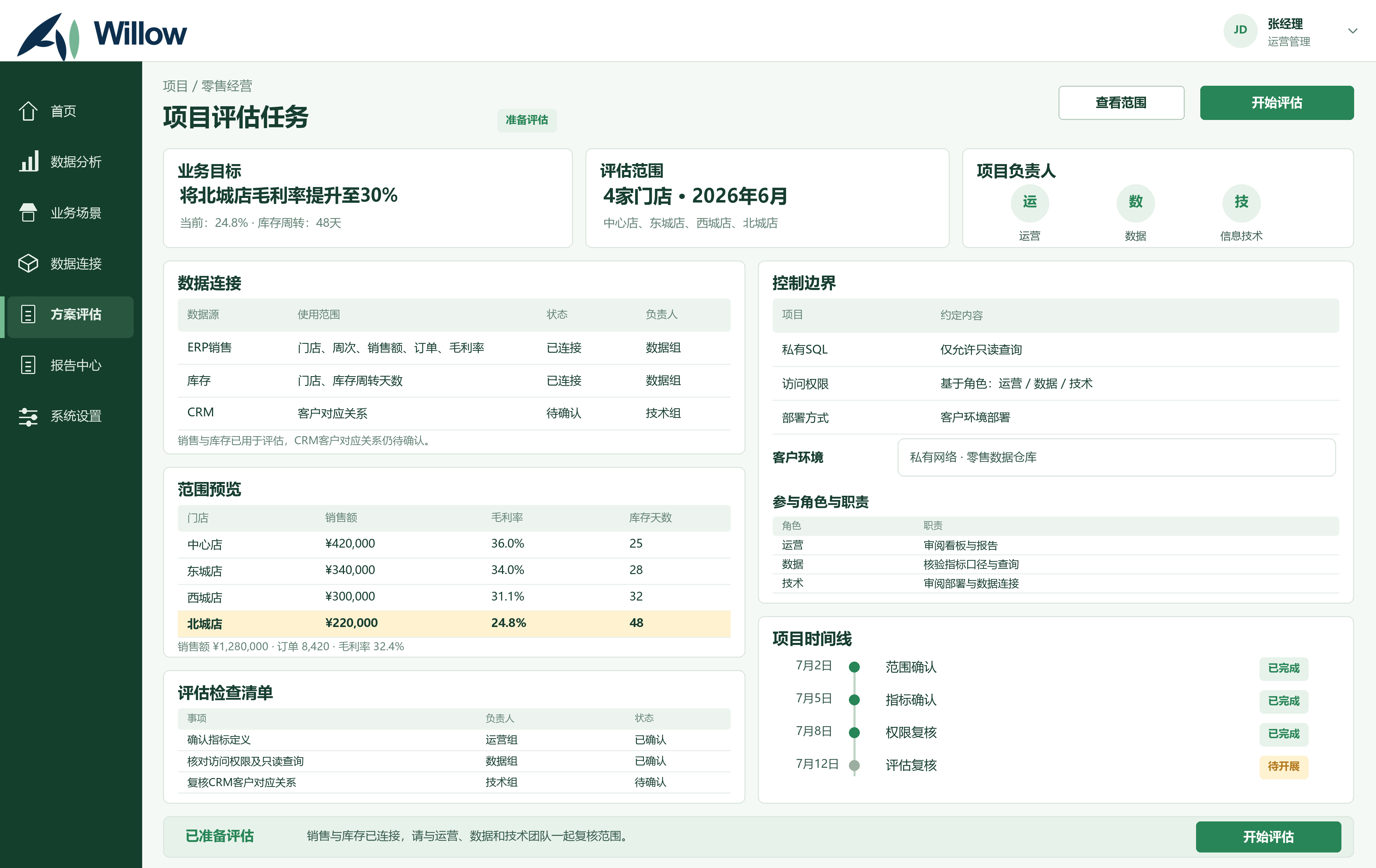
Choose the management question to improve.
Inputs: priority business question, current workflow, participating roles and the decision to be made. Outputs: scenario scope, business owner, deliverable list and hypotheses to verify. Customer responsibilities: explain the business context, decision process and current challenges; appoint a business owner. Willow responsibilities: map the scenario workflow, connect analysis deliverables to follow-up action and propose a scope for assessment. Joint agreement: priorities, scope boundaries, participating roles and stage goals. Progression criterion: clarify the business question and delivery goals before data verification.
Check the data. Then define the pilot.
Inputs: representative samples, field dictionary, data sources, existing metric definitions and permission boundaries. Outputs: data verification checklist, quality issues, standardization needs, definition differences and missing materials. Customer responsibilities: provide authorized data and definitions; arrange for a data owner to confirm field meaning. Willow responsibilities: check structure and quality, explain usable scope, integration conditions and additional materials needed. Joint agreement: data use boundaries, access methods, deployment requirements and preparation plan. Progression criterion: key data and definitions can be confirmed, and the pilot input scope can be agreed.
Agree on delivery and verification first.
Inputs: confirmed datasets, metric definitions, report requirements, accountable roles and verification conditions. Outputs: agreed Dashboards, reports or event and task workflows, together with review and verification records. Customer responsibilities: review business findings, confirm actions and owners, and perform business acceptance of pilot deliverables. Willow responsibilities: configure and deliver the agreed scope, explaining source rationale, limitations and unresolved issues. Joint agreement: baseline, acceptance criteria, verification period and the scope of revisions if criteria are not met. Progression criterion: use recorded evidence to accept, revise or stop; unverified numbers cannot stand in for results.
Expand the scope you have validated.
Inputs: pilot acceptance records, organizational roles, system integration needs and governance requirements. Outputs: phased scope, permission and collaboration plan, shared asset list and maintenance plan. Customer responsibilities: assign organizational owners, data permissions, business collaboration and routine confirmation responsibilities. Willow responsibilities: define expansion scope, integration work, configuration maintenance and recovery arrangements; deliver by stage. Joint agreement: ongoing verification, issue escalation, maintenance ownership and rules for subsequent changes. Progression criterion: confirm pilot results before gradually expanding within the agreed organizational scope.