OPEN PLATFORM

One core. Many applications.
Data, semantics, knowledge, Agents, metric rules and operations governance form Willow's platform core. Applications combine them around specific business needs, with clear inputs, outputs and human responsibilities.

Discuss an application
Willow business scenario workspace: management questions, data scope, metric definitions and analysis deliverables

SHARED CORE

Different businesses. Consistent definitions.

Define data, knowledge and responsibilities first, then organize analysis and follow-up action. The shared core gives applications a consistent foundation; assessment confirms the integration and delivery scope.

Data and semantics

Connect data sources, table structures, field meaning and standard datasets so applications use business definitions that can be confirmed.

Shared objects: datasets, field dictionaries, semantic mappings and version lineage.

Knowledge and Agents

Organize domain knowledge and Agent responsibilities around business questions, defining available materials, tool scope and human confirmation points.

Shared objects: knowledge materials, scenario context, Agent tasks and tool boundaries.

Metrics and rules

Manage metric definitions, calculation logic and event trigger rules together, retaining business rationale and review ownership.

Shared objects: metric definitions, SQL, rule conditions, reviewers and scope.

Analysis expression

Organize confirmed data and findings into Dashboards, charts and reports, retaining presentation templates and source rationale.

Shared objects: Dashboards, chart configurations, report templates and findings.

Operations governance

Connect alerts, tasks, collaboration, evidence and verification around events, with an owner for the action following analysis.

Shared objects: events, accountable roles, tasks, handling evidence and verification records.

FOUR APPLICATION DIRECTIONS

Four directions. Each with its own scope.

One platform core can support different business applications. Each direction explains its scope and design status separately; shared capabilities do not mean every application is complete.

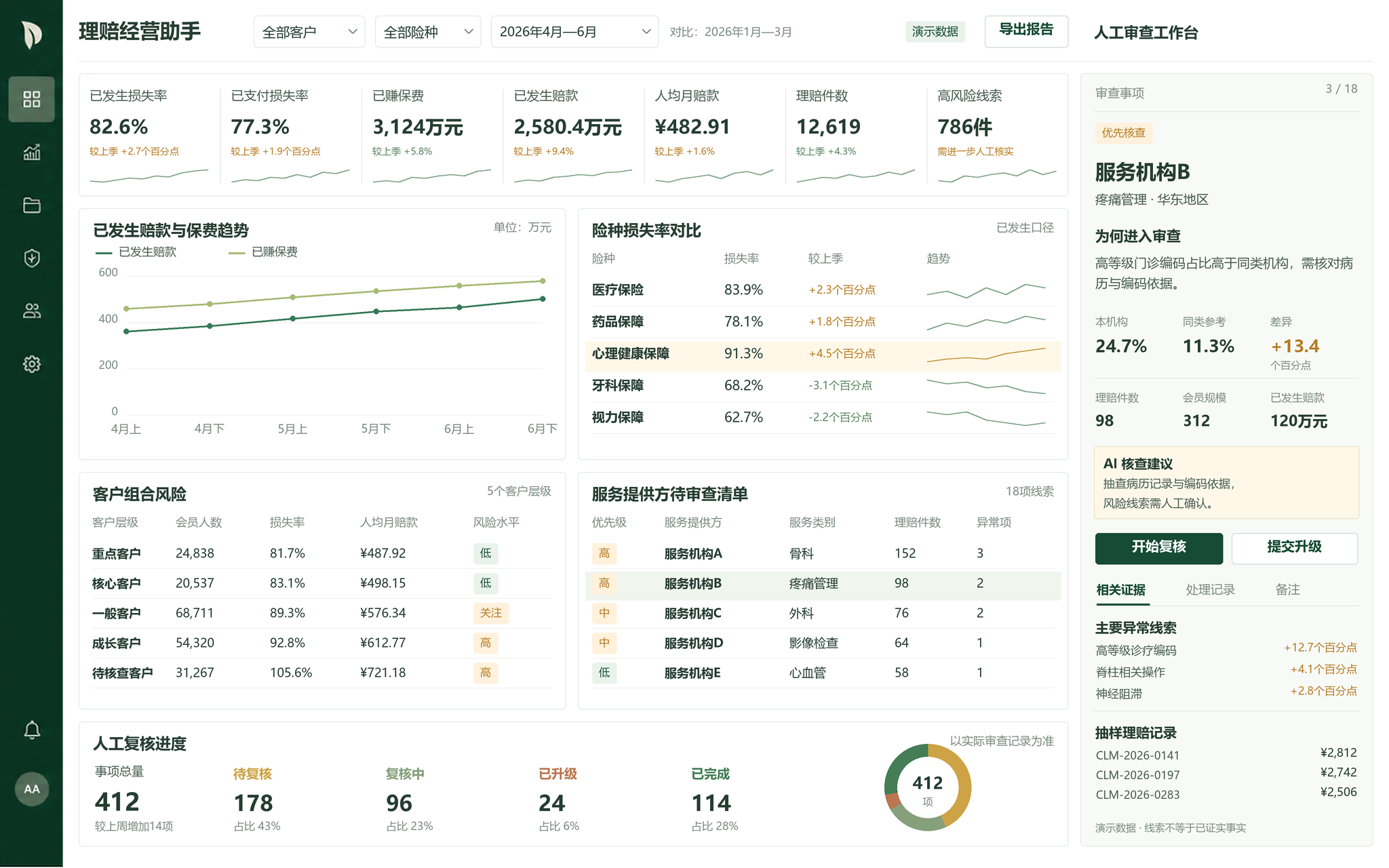
AI RCM

For group health insurance and commercial insurance operations: organize loss ratios, risk leads, evidence and human follow-up. Risk leads remain distinct from proven facts.

Inputs and outputs: use policy, customer, claims and provider data to define deliverables around business metrics, review leads, evidence and follow-up tasks.

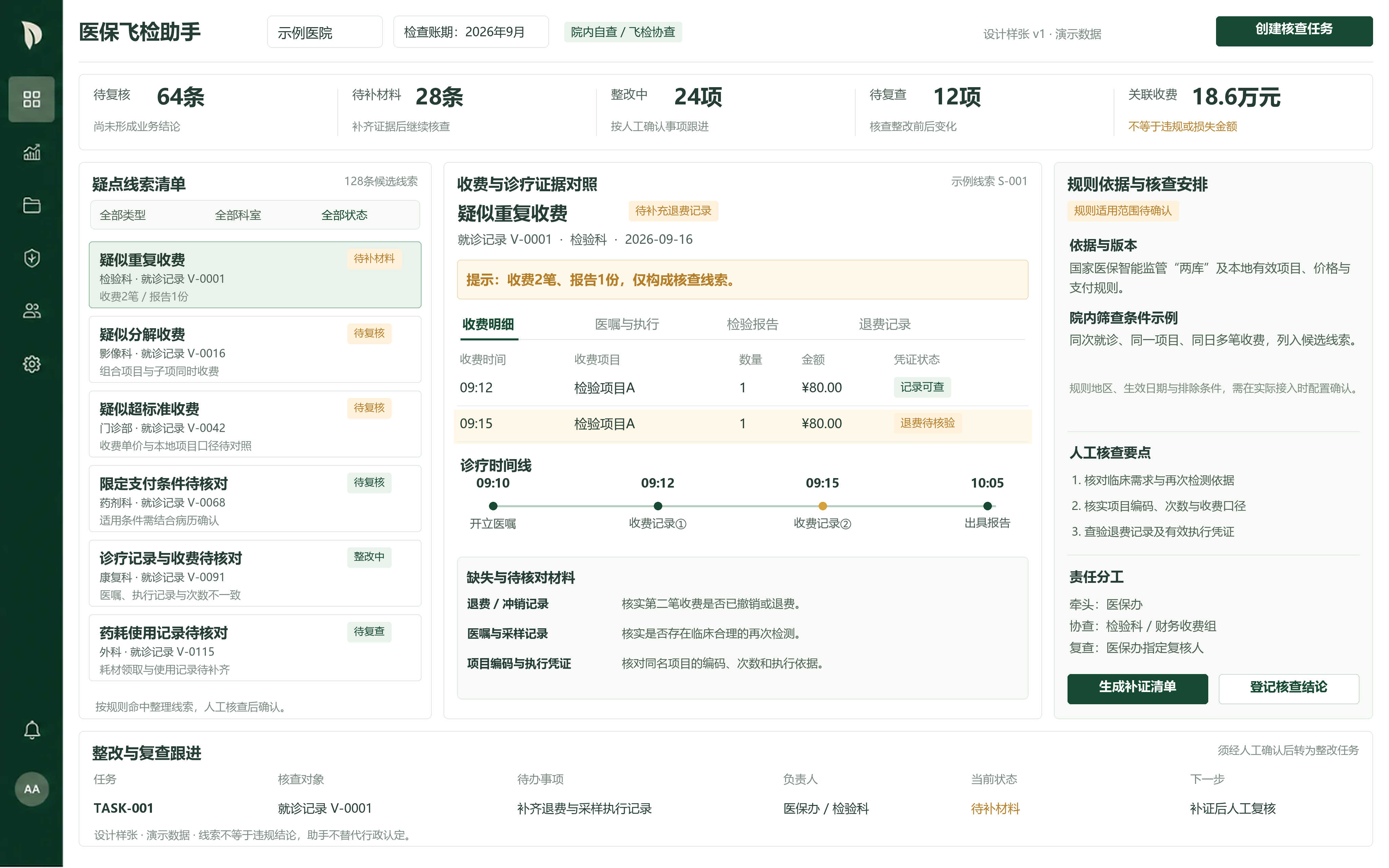
Medical Insurance Inspections

Organize human review around claims rules, coding standards, timelines and evidence, distinguishing rule rationale, data evidence and analytical inference.

Inputs and outputs: use cases, codes, rules and timelines to define deliverables around review checklists, anomaly leads and remediation tasks.

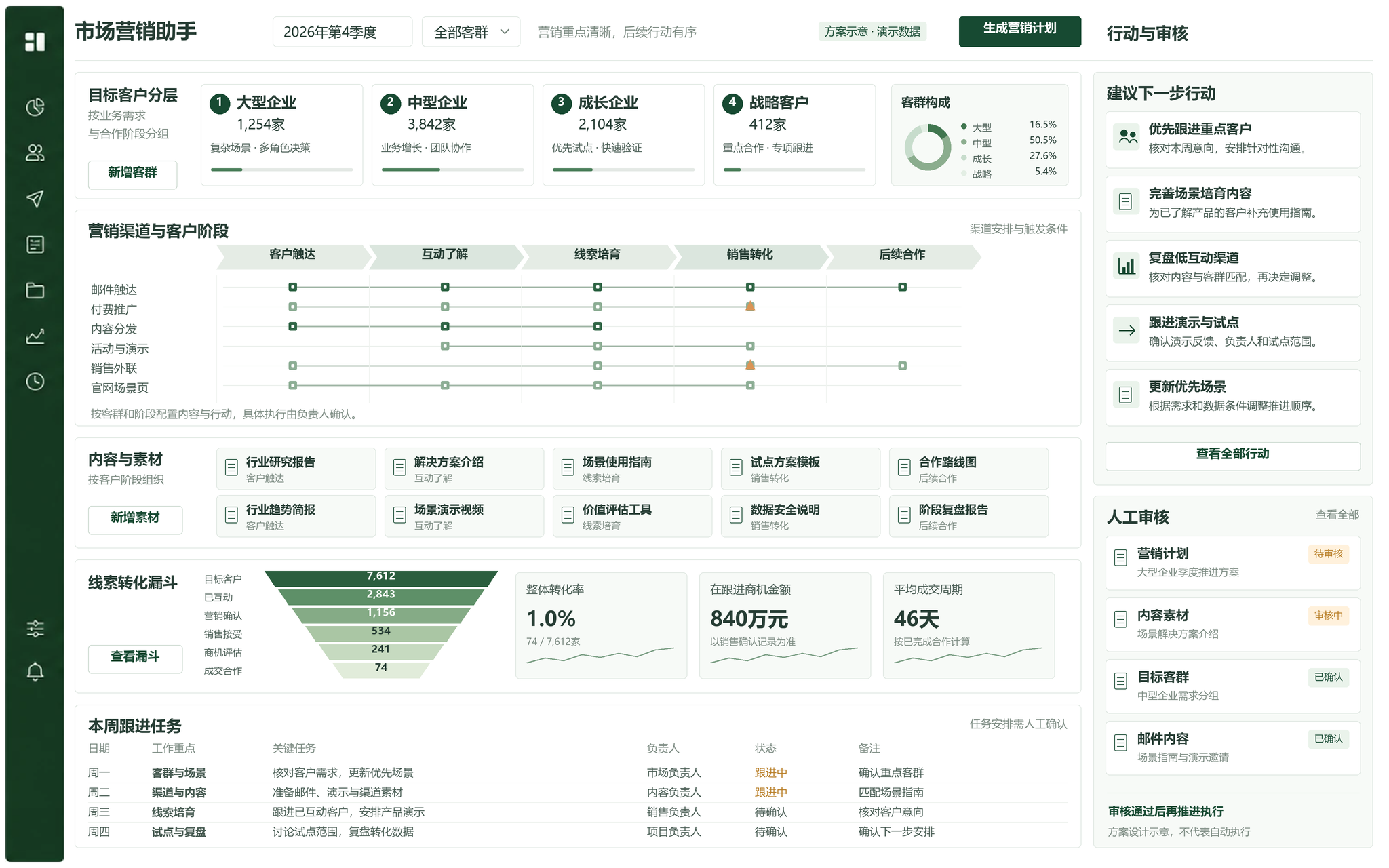
Marketing Assistant

Organize target customers, scenarios, content assets, channels and sales stages. Currently positioned as a direction for strategy and operations design.

Inputs and outputs: use customer, scenario, channel and content materials to define scenario priorities, marketing assets, funnel views and action plans.

Canteen Menu Recommendations

Explore recommendations constrained by dishes, ingredients, inventory, cost, nutrition, allergens and preferences. Direction confirmed; detailed design remains to be completed.

Inputs and outputs: define data contracts, recommendation rules and approval responsibilities first. Detailed design will confirm menu plans, constraint notes and subsequent verification scope.

ASSEMBLE FOR A SCENARIO

Agree on the contract. Assemble the capabilities.

Start with a business question that can be confirmed, identifying which shared objects to reuse and which rules and workflows require business-specific additions.

  1. Inputs: business scenario, data and knowledge materials, rule rationale, participating roles and permission boundaries.

  2. Outputs: application scope, shared object list, workflow, input and output contracts and verification plan.

  3. Shared responsibilities: the customer confirms business definitions, authorization and human decisions; Willow defines the capability combination, integration scope and agreed deliverables.

Let business applications reuse one trusted analysis core.

Organize application packages around a shared core and assess configuration, orchestration and governance

BUILD ON WILLOW

Bring your business scenario to the platform.

Confirm the reusable core, application-specific rules and human responsibilities together. Agree on interfaces, integration methods and delivery scope during the application assessment.

Request an open platform assessment